Home / Articles
Vein Stripping Surgery: When It’s Still the Best Choice
Home / Articles
Vein Stripping Surgery: When It’s Still the Best Choice
In an age of lasers, glue therapy, and catheter-based procedures, it might surprise you to hear that traditional vein stripping still holds its place in modern vascular care. At Always For You Medical Center in Gwangjin-gu, Seoul, we understand that the "best treatment" isn’t always the newest — it’s the one most suited to your specific condition, anatomy, and long-term health goals.
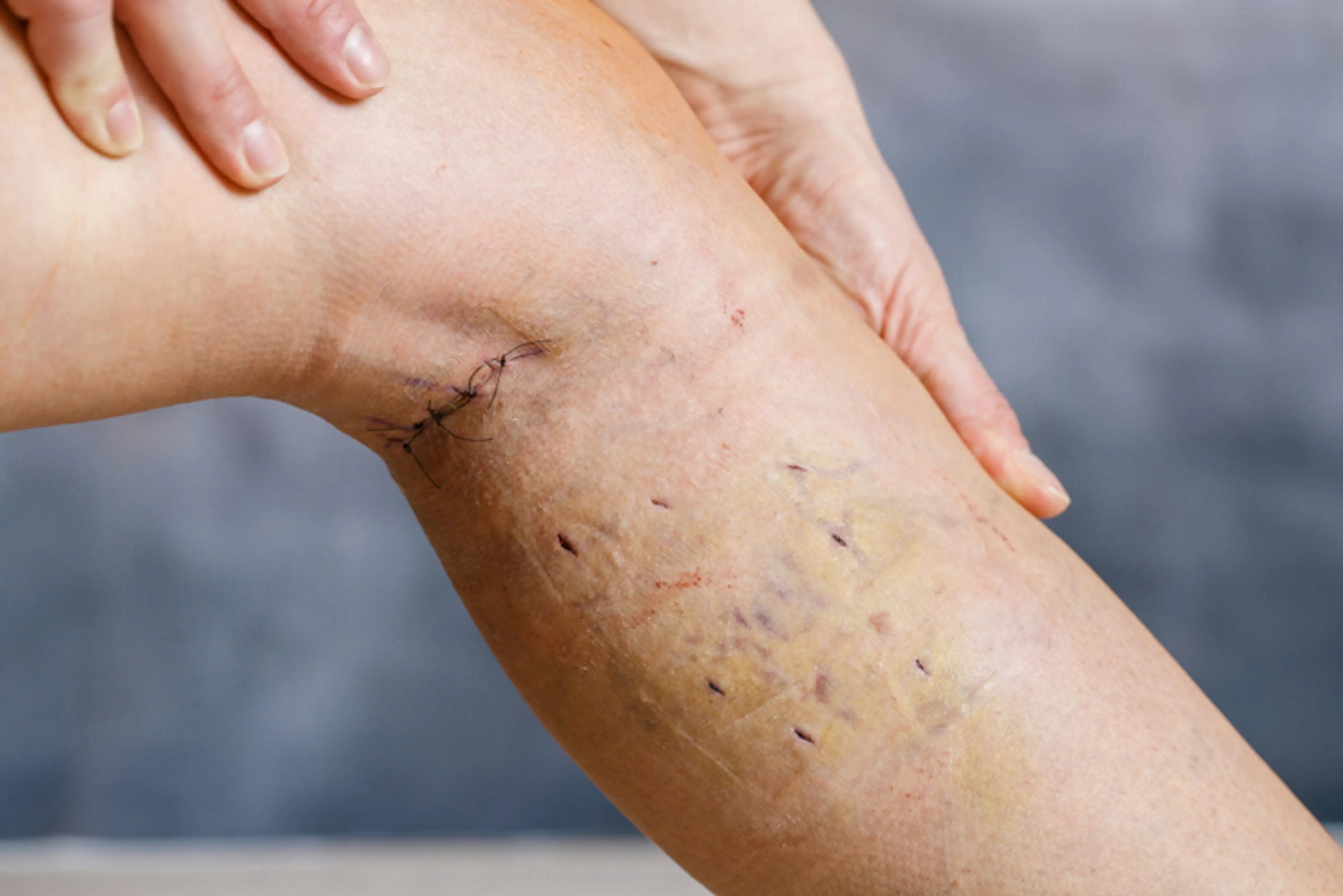
Vein stripping surgery is a time-tested procedure designed to remove large, problematic varicose veins from the legs, most commonly the great saphenous vein (GSV). It involves making small incisions near the groin and ankle, inserting a flexible instrument known as a vein stripper, and physically removing the diseased vein. The procedure is usually done under general or spinal anesthesia and can be completed in about 60 to 90 minutes.
While the term "stripping" may sound harsh, in experienced hands the technique is both controlled and precise. Recovery takes approximately 2 to 4 weeks, during which patients are advised to wear compression stockings, keep the leg elevated when resting, and gradually return to normal activities. For many, the results are not only cosmetically satisfying but also offer long-lasting relief from chronic discomfort and swelling.
Although minimally invasive treatments have become popular for their convenience and faster recovery times, vein stripping remains invaluable in certain clinical scenarios. As we often tell patients: the right treatment is not always the trendiest — it's the one that delivers the safest, most durable outcome based on your unique vascular makeup.
Varicose veins are caused by venous insufficiency, a condition in which the valves inside the veins weaken or fail altogether. Normally, these valves help return blood to the heart by resisting gravity. But when they malfunction, blood begins to pool in the lower legs, leading to increased pressure and vein enlargement.
Over time, this pressure causes veins to bulge, twist, and become visibly prominent under the skin. The most commonly affected veins are superficial ones, such as the great saphenous vein. Symptoms may include:
Heaviness or aching in the legs
Swelling around the ankles
Nighttime leg cramps
Itching or burning sensations
Skin discoloration or hardening
Visible blue or purple veins
If left untreated, severe cases can progress to venous stasis dermatitis, skin ulcers, and even thrombophlebitis (vein inflammation with clots). While many people seek care for cosmetic reasons, varicose veins are fundamentally a medical issue requiring thoughtful evaluation and treatment.
Despite the rise of minimally invasive options like radiofrequency ablation (RFA), endovenous laser therapy (EVLT), and sclerotherapy, there are specific cases where traditional vein stripping remains the safest, most effective choice:
Patients who have undergone previous procedures may experience recurrence due to missed tributaries or recanalization of previously treated veins. In these cases, scarring or altered anatomy may render catheter-based interventions ineffective. Vein stripping provides a more direct, mechanical solution for thoroughly removing problem veins.
At Always For You Medical Center, we often see patients who were treated at other clinics with newer technologies but experienced incomplete symptom relief. In such instances, stripping allows us to reset the vascular system more comprehensively.
When veins become severely dilated — often more than 12 mm in diameter — endovenous devices may not provide complete closure or can increase the risk of procedural failure. Stripping physically removes these large-diameter veins, ensuring that malfunctioning segments are completely eliminated.
This is especially relevant in individuals who delay treatment for years and present with advanced disease, where the size and tortuosity of the veins outmatch the capacity of modern endoluminal techniques.
Anatomy matters greatly in vascular care. Superficial veins that are too close to the skin, unusual vein branching patterns, or veins that follow non-linear paths can be difficult to treat with catheters. Stripping offers direct, surgeon-controlled access, which can be safer and more effective in these scenarios.
Our center leverages preoperative Doppler ultrasound mapping to assess vein path, depth, and surrounding structures. In complex cases, open surgery provides the most control and predictability.
Modern therapies can be costly, and not all are covered by insurance. This is especially important for international patients or those in Korea navigating public insurance systems like NHIS. Vein stripping, being a well-established standard, is typically more affordable and recognized by a broader range of insurers.
Also, equipment for advanced therapies is not universally available, particularly in smaller clinics or rural hospitals. Vein stripping remains a widely accessible and reliable option for many facilities.
While newer treatments have excellent outcomes, they often rely on the vein closing passively over time. In younger patients with good vascular tone and longer life expectancy, complete removal of the diseased vein may offer a more definitive solution with lower recurrence rates over decades.
For patients in their 30s or 40s, particularly those with a strong family history of varicose veins, stripping can serve as a preventive measure, potentially sparing them multiple treatments over their lifetime.
At Always For You Medical Center, we never take a cookie-cutter approach. Every patient receives a personalized diagnostic workup, including duplex ultrasonography to assess vein function, valve integrity, and blood flow direction.
We weigh multiple factors: vein size, depth, valve reflux patterns, cosmetic goals, occupation, and even travel plans. The goal is to select a method that delivers the best long-term outcome with minimal disruption to your life.
This comprehensive evaluation is what differentiates expert-led care from quick, one-size-fits-all solutions. Our surgical team, with backgrounds at leading institutions like Asan Medical Center and Seoul National University Hospital, brings decades of precision to each decision.
Vein stripping is performed in a clean, sterile environment and generally takes 60 to 90 minutes. After small incisions are made near the groin and lower leg, a special wire is threaded through the great saphenous vein. Once secured, the vein is gently pulled out through the incision.
Patients are typically discharged on the same day, and pain is manageable with over-the-counter medications. Post-operative care includes:
Wearing compression stockings for 1–2 weeks
Daily walking to improve circulation
Avoiding heavy lifting or high-impact activity for 2–4 weeks
Elevating the legs when resting
Some bruising, swelling, and mild discomfort are expected, but serious complications are rare when performed by experienced surgeons. Infection, nerve irritation, or deep vein thrombosis (DVT) can occur but are minimized with proper technique and patient education.
Vein stripping has a strong track record. Multiple studies have shown that its recurrence rates are comparable — and in some cases superior — to those of endovenous procedures, especially in cases with extensive reflux.
At Always For You Medical Center, we don’t just perform the surgery and send you home. Our follow-up care includes routine ultrasound scans, lifestyle coaching, and long-term monitoring to prevent recurrence.
We also emphasize the importance of preventive strategies such as:
Weight management
Avoiding prolonged sitting or standing
Regular leg elevation
Wearing compression garments during travel or extended standing
Patients often report not only physical relief but renewed confidence and energy. The discomfort that once clouded daily life — aching legs after work, swelling during the summer, constant need to hide one’s legs — is often replaced by a lighter, freer feeling.
Choosing vein treatment isn’t just about comfort or aesthetics. It's about quality of life, functional mobility, and in some cases, preventing serious complications like venous ulcers or blood clots.
If you’ve been told your only options are lasers or injections, it may be time for a second opinion. At Always For You Medical Center, we offer the full spectrum of vascular care — and we’re not afraid to recommend traditional methods when they serve our patients best.
Our philosophy is simple: the best procedure is the one that restores your health and fits your life. With personalized diagnostics, surgical precision, and patient-first care, we’re always here for you.
If you're dealing with varicose veins that just won't go away, consider booking a consultation. Your legs work hard for you — it’s time to return the favor.